DTF vs Screen Print vs Embroidery: which to choose (Miami 2026)
A clear decision guide for custom apparel in Miami: what each method is, its pros, cons, cost dynamics and best use — so you pick right and don't overpay.
The short answer
If your design is full color, photographic, or you need only a few pieces, choose DTF. If you're running hundreds of pieces with a simple, few-color design, screen printing gives you the lowest cost per unit. If you want logos on polos, hats, jackets, or uniforms with a premium feel and maximum durability, choose embroidery. That rule settles about 90% of decisions; the rest comes down to the fabric, the garment color, and your budget.
The three methods, no filler
Customizing apparel in Miami almost always comes down to three roads: DTF, screen printing, and embroidery. There is no single "best" method. There is a right method for your design, your quantity, and your garment. Here's the honest breakdown of each.
DTF (Direct-to-Film transfer)
The design is printed onto a film and then heat-pressed onto the fabric. The result is full color with photographic detail, no order minimum, and it works on most fabrics and colors.
Pros: - Unlimited color and real gradients with no extra charge per color. - No minimum: a single shirt costs the same per unit as a small run. - Works on cotton, polyester, blends, and on both light and dark garments. - Fine detail: complex logos, photos, dense illustrations.
Cons: - A slightly raised feel (you can sense the printed layer), though it keeps getting softer. - On very large runs it stops being the cheapest option versus screen printing.
Best for: colorful or complex designs, small and medium runs, prototypes, limited editions, events.
Durability: good with proper care. It survives dozens of washes without cracking if you wash inside out, cold, and skip the aggressive dryer.
Cost dynamics: the per-unit price stays steady no matter how many colors you use. That's why it wins for small and colorful jobs.
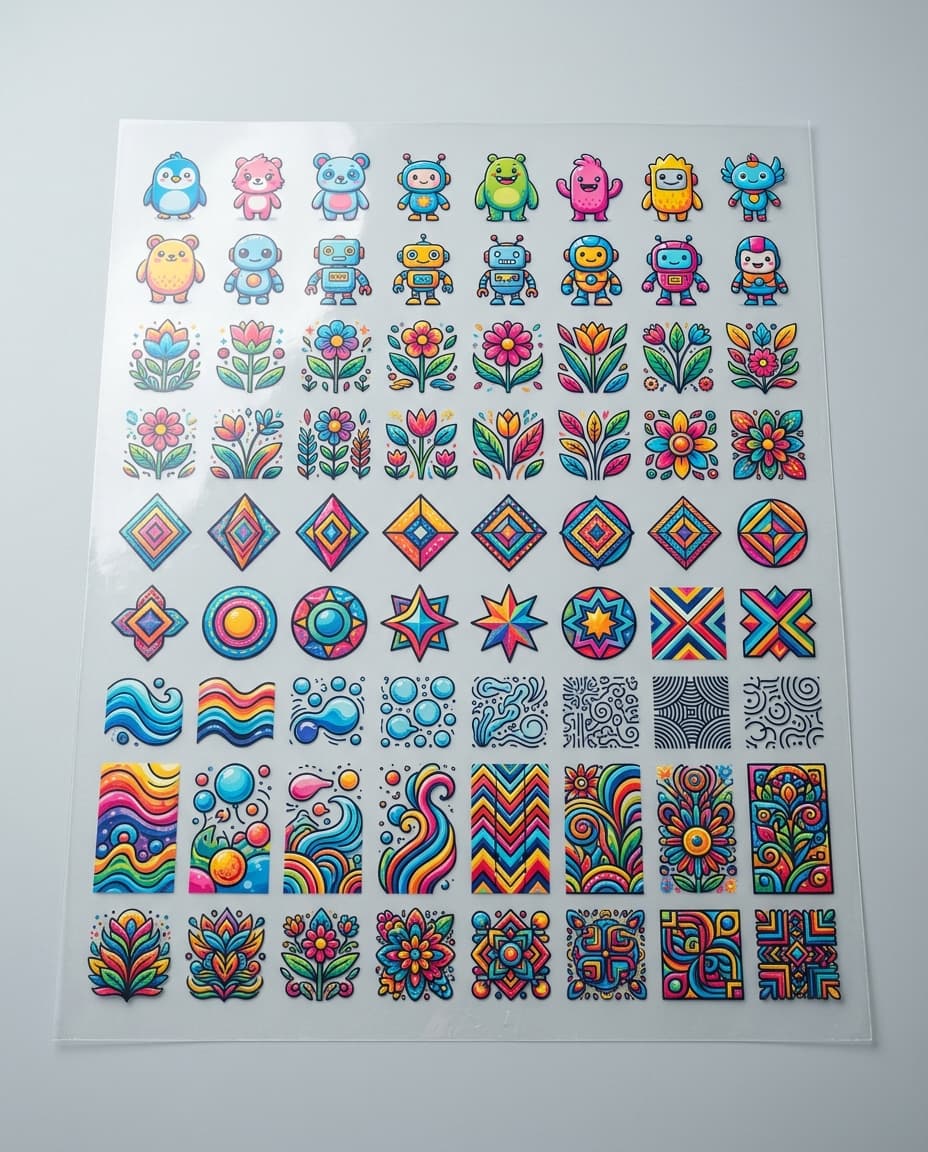
At KOAI we print DTF on 22-inch-wide gang sheets at any length you need, with vibrant color and a solid white underbase that makes the design look good on light AND dark garments. The transfers come out press-ready.
Screen printing (serigrafía)
Ink is pushed through a mesh screen with a stencil; you need one screen per color in the design. It's the classic method behind band tees and team uniforms.
Pros: - The lowest cost per unit at large quantities. - Solid, opaque, very bright colors. - Soft hand on cotton when done right. - Excellent durability: it holds up for years of wear.
Cons: - There's a setup cost for every color (building each screen). On small runs that drives the unit price way up. - Not practical for photos or designs with many colors.
Best for: large runs of a simple, few-color design — promo tees, staff shirts, event merch, single-logo uniforms.
Durability: among the highest. The ink bonds into the fiber.
Cost dynamics: economy of scale rules. The more pieces, the more the setup cost spreads out and the cheaper each one gets.
Embroidery (bordado)
The design is stitched with thread onto the garment. It's the premium option: physical texture, the sheen of thread, and durability that beats any print.
Pros: - A sense of quality and professionalism that's hard to match. - Extreme durability: it doesn't crack, peel, or fade. - Perfect for corporate uniforms and garments under heavy daily use.
Cons: - It can't reproduce photos or gradients. - Not ideal for very large designs or fine detail (thread has its limits). - It carries a one-time logo digitizing cost.
Best for: logos on polos, hats, jackets, backpacks, smocks, and uniforms.
Durability: the highest of the three.
Cost dynamics: priced by stitch count plus logo digitizing. At KOAI the digitizing is charged only once: on your reorders it's waived. You also get a stitch proof before production, and the turnaround is 2 to 4 days.

How to choose: a decision guide
Find your situation and follow the recommendation.
- 1One shirt or just a few, with a color design: DTF. No minimum and no penalty for colors.
- 2Photographic design, dense illustration, or gradients: DTF. It's the only one that reproduces that level of detail on fabric.
- 3200, 500, or more pieces with a 1-to-3-color logo: screen printing. This is where you win on cost per unit.
- 4Company logo on polos, hats, or uniforms: embroidery. Premium finish and years of durability.
- 5Dark garment with a light or colorful design: DTF, thanks to its solid white underbase that keeps the colors alive.
- 6Event merch on a tight budget with good volume: screen printing if the art is simple; DTF if it's colorful and the volume is moderate.
- 7A mix of garments (shirts + hats + jackets) with the same logo: embroidery for hats and jackets, DTF or screen printing for the shirts depending on quantity.
Don't pay for colors you don't need, or for a setup you won't spread out. The right method is the one that fits your quantity and your design — not the most expensive one, and not the trendiest.
The economics of each method
Understanding why the price moves saves you money.
- Screen printing wins on volume because its main cost is building screens (one per color). That cost is fixed: spread across 500 shirts it nearly vanishes per unit. Across 10 shirts, you feel it on each one.
- DTF wins on small and colorful because there's no per-color setup. Printing a 12-color design costs the same as a 2-color one. That's why a single piece is still cost-effective.
- Embroidery is premium because every stitch is machine time and real thread. The price climbs with the logo's complexity (stitch count), not with colors. The initial digitizing is the investment that pays off on reorders — and at KOAI it's never charged again.
Garment and color considerations
- Cotton: takes all three methods well. Screen printing feels especially soft on cotton.
- Polyester and dri-fit: DTF works very well; with screen printing you have to manage the ink to avoid dye migration on polyester.
- Dark garments: they need a white base under the color. KOAI's DTF already includes it, so your design doesn't look dull.
- Hats and structured pieces: embroidery, almost always. The surface and stiffness work in its favor.

Care and durability
Any method lasts longer if you treat it right:
- Wash inside out, in cold water.
- Avoid high-heat drying; air or low heat is ideal.
- Don't iron directly over the print or the embroidery (iron from the inside or use a cloth).
- No bleach, no harsh fabric softeners.
With that, a well-done screen print or embroidery stays with you for years, and a DTF survives dozens of washes without cracking.
Common mistakes
- Using screen printing for 10 multicolor shirts. You pay a setup for every color you'll never spread out. DTF wins here.
- Ordering embroidery for a photo or a huge design. Thread can't reproduce photos; the result looks coarse. DTF wins here.
- Using DTF for 1,000 single-color shirts. It works, but you overpay. Screen printing wins here.
- Forgetting the white base on dark garments. Without it, colors look dull. (At KOAI, DTF already includes it.)
- Not asking for a proof before producing an embroidered logo. That's why we deliver a stitch proof: you approve before we stitch hundreds of pieces.
Decide and produce with KOAI Print Factory
At KOAI Studios we do all three methods — DTF, screen printing, and embroidery — from a single garment to large runs, with instant online pricing, Miami pickup, or shipping across the United States. If you're not sure which one fits, we'll tell you based on your design, your quantity, and your garment.
Browse your options for custom t-shirts in Miami, embroidery in Miami, and DTF transfers in Miami, or reach us directly on WhatsApp at +1 786-550-0652, office (786) 598-9235, email [email protected]. Shop: 2033 NW 135th Ave Ste 10, Miami FL 33182. Send us your artwork and the quantity you need, and we'll tell you the right method before you overpay.